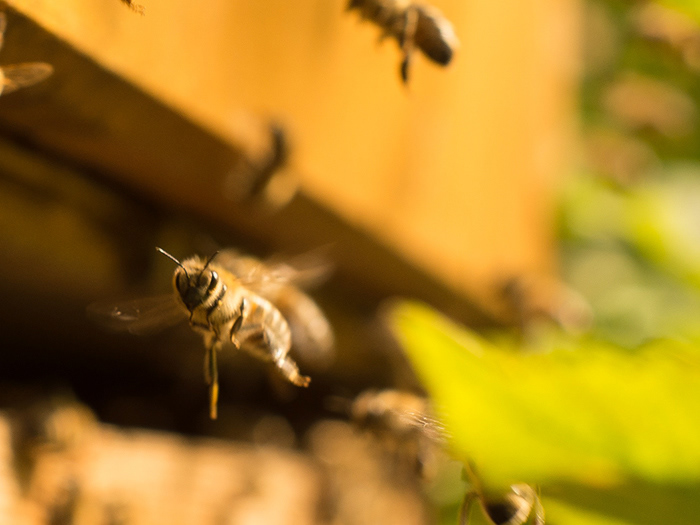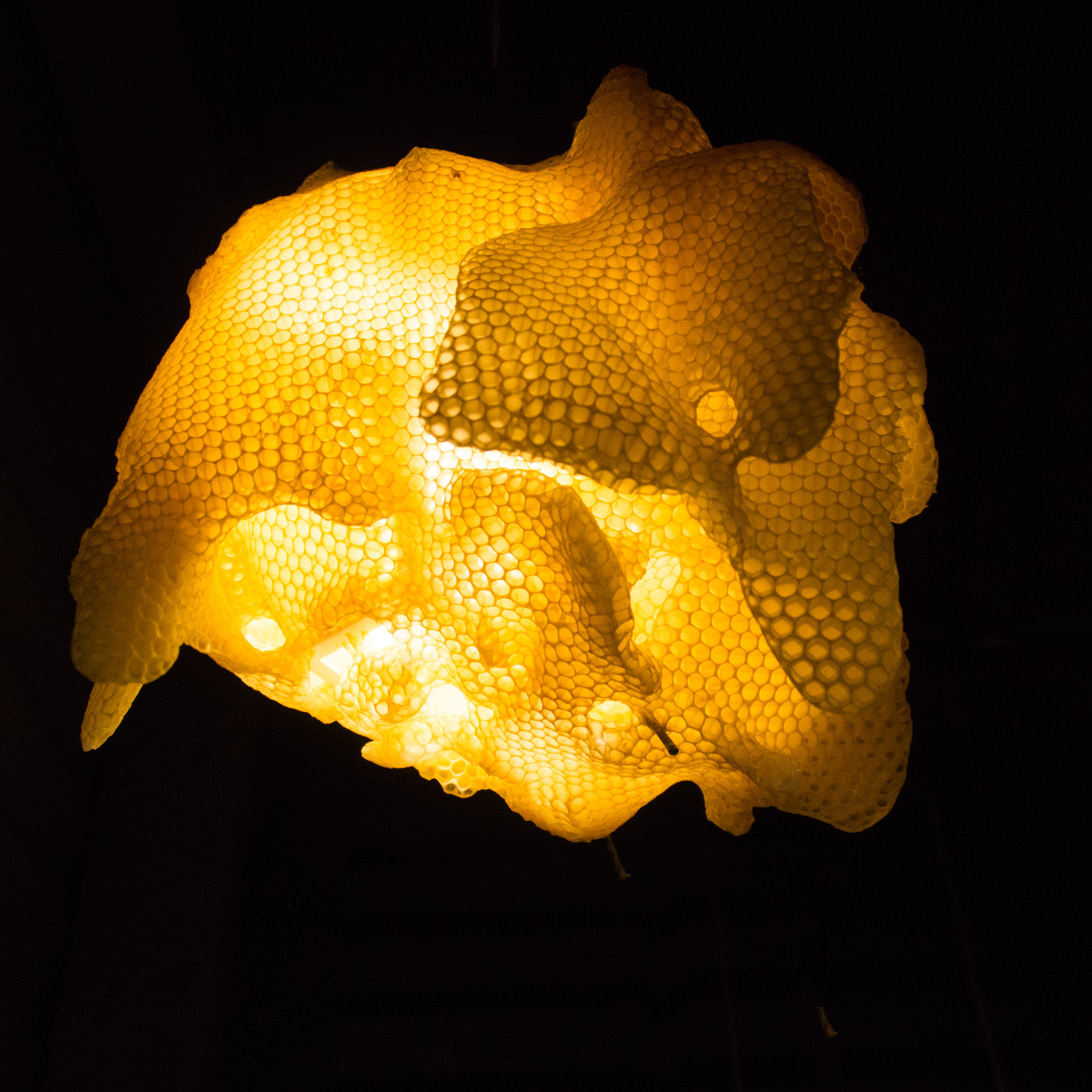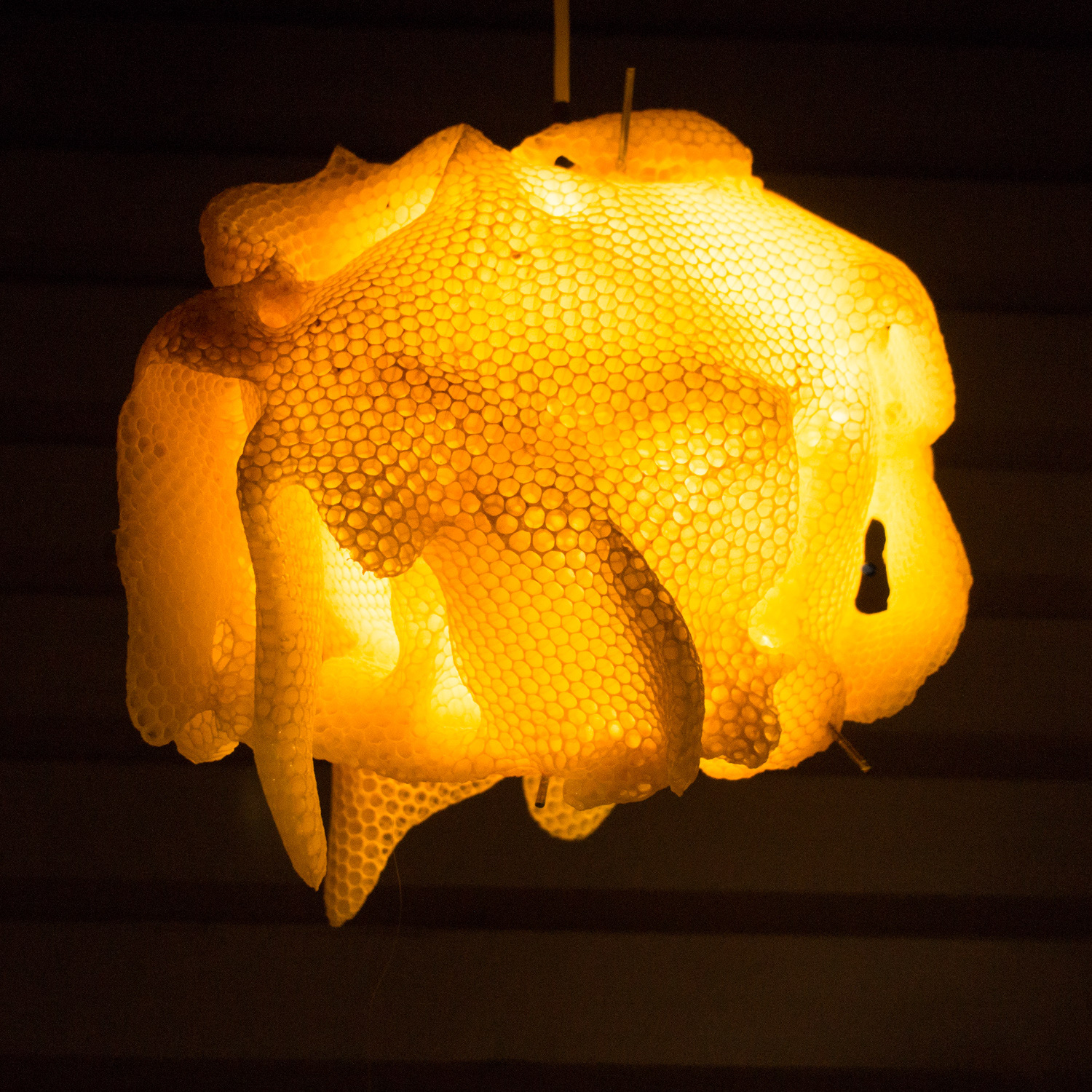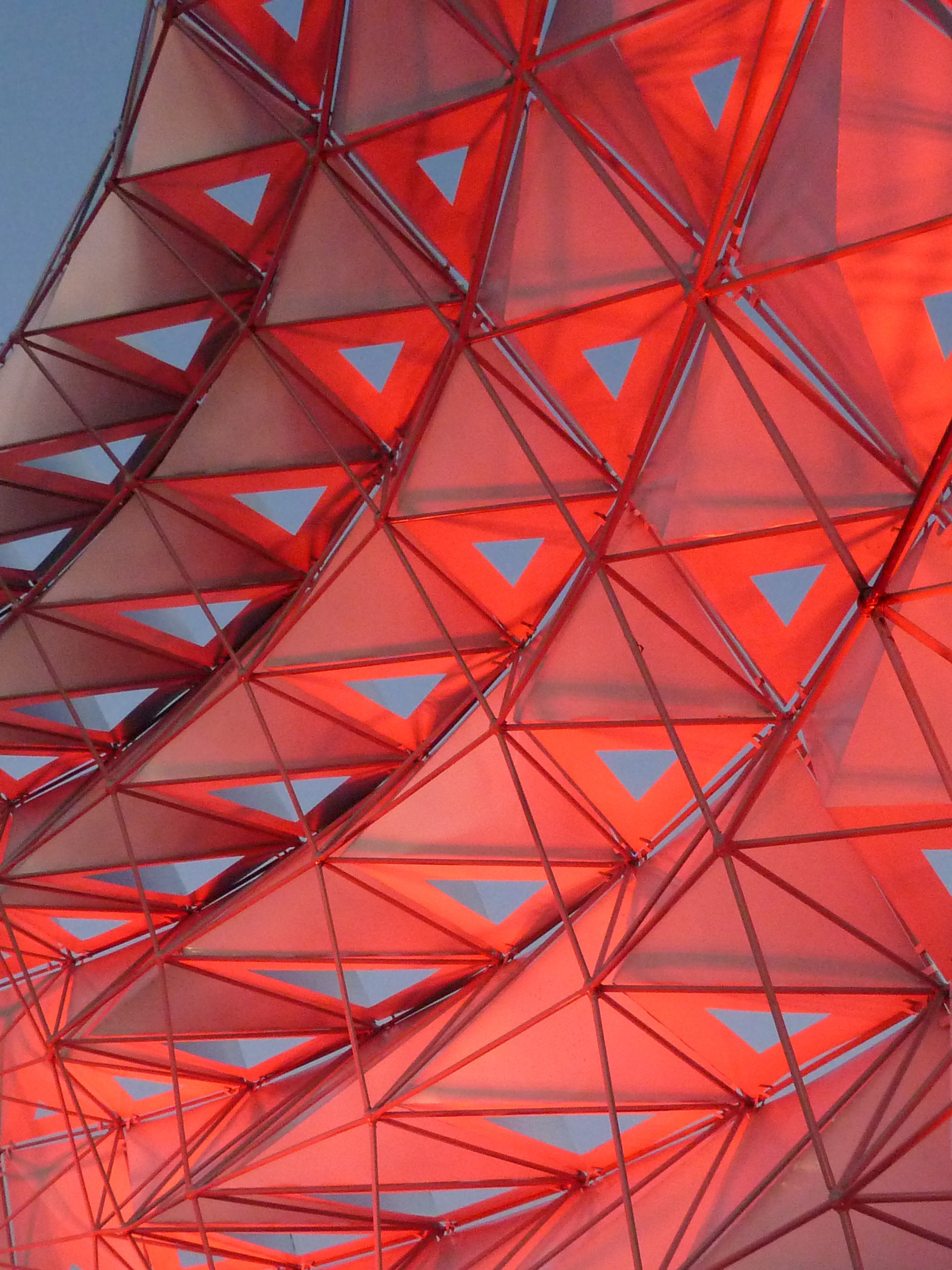
Bee'otopia is an experimental design project by Esben Bala Skouboe that invites children to imagine a different world—one where objects are designed and produced locally, in collaboration with nature rather than at its expense. Inspired by the remarkable collective intelligence of bees and their intricate hives, the project challenges conventional ideas of manufacturing, consumption, and sustainability.
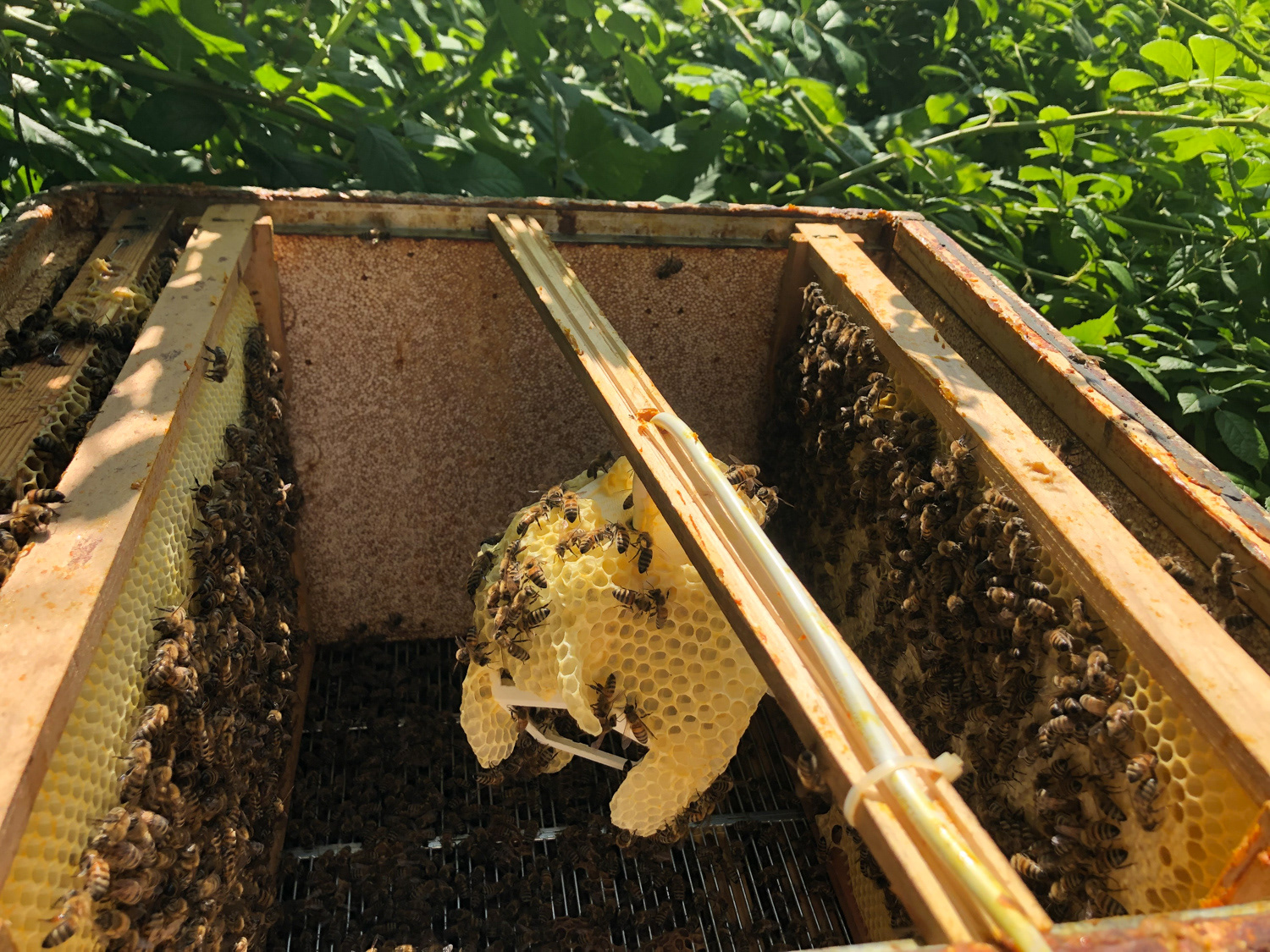
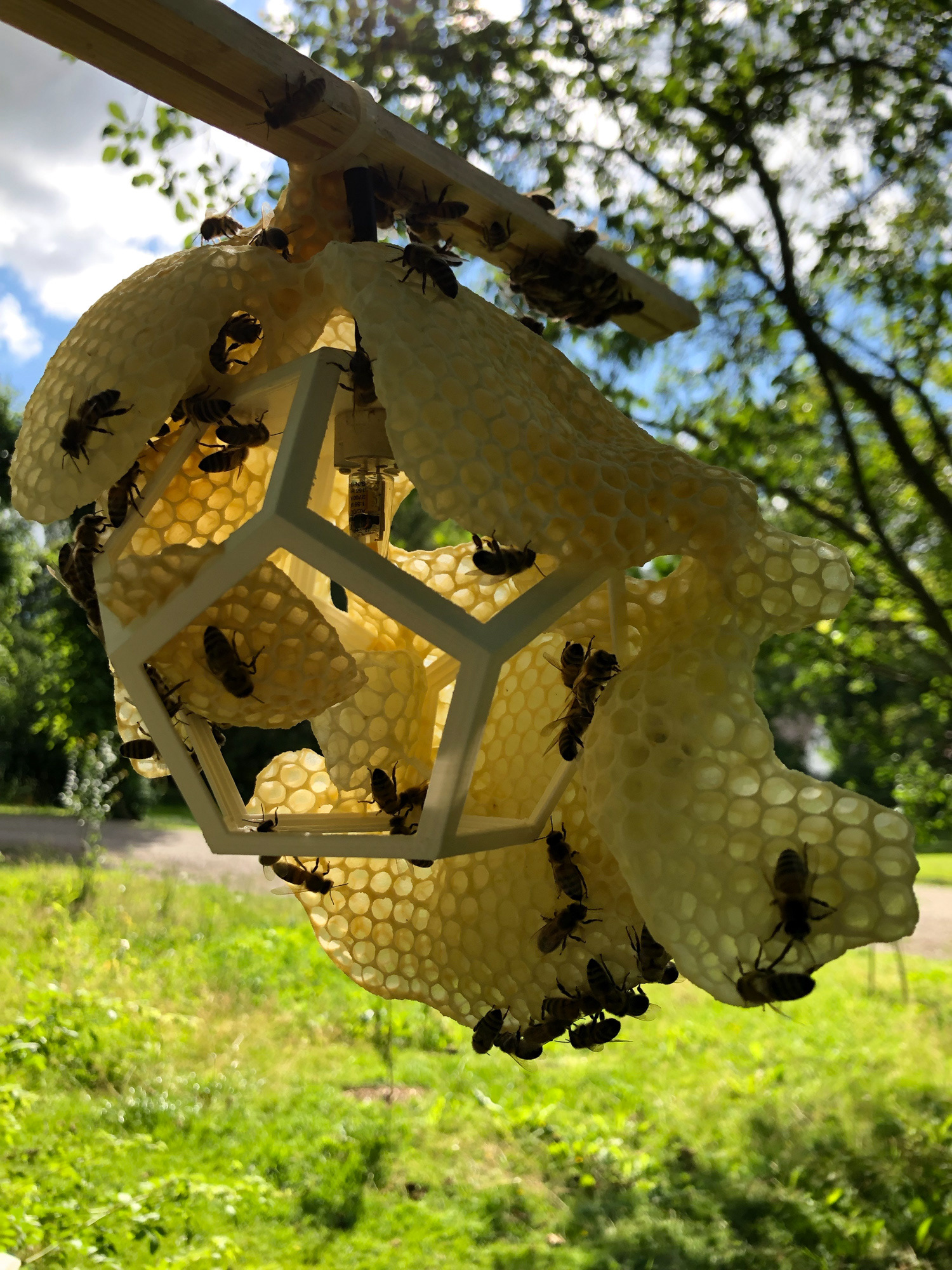
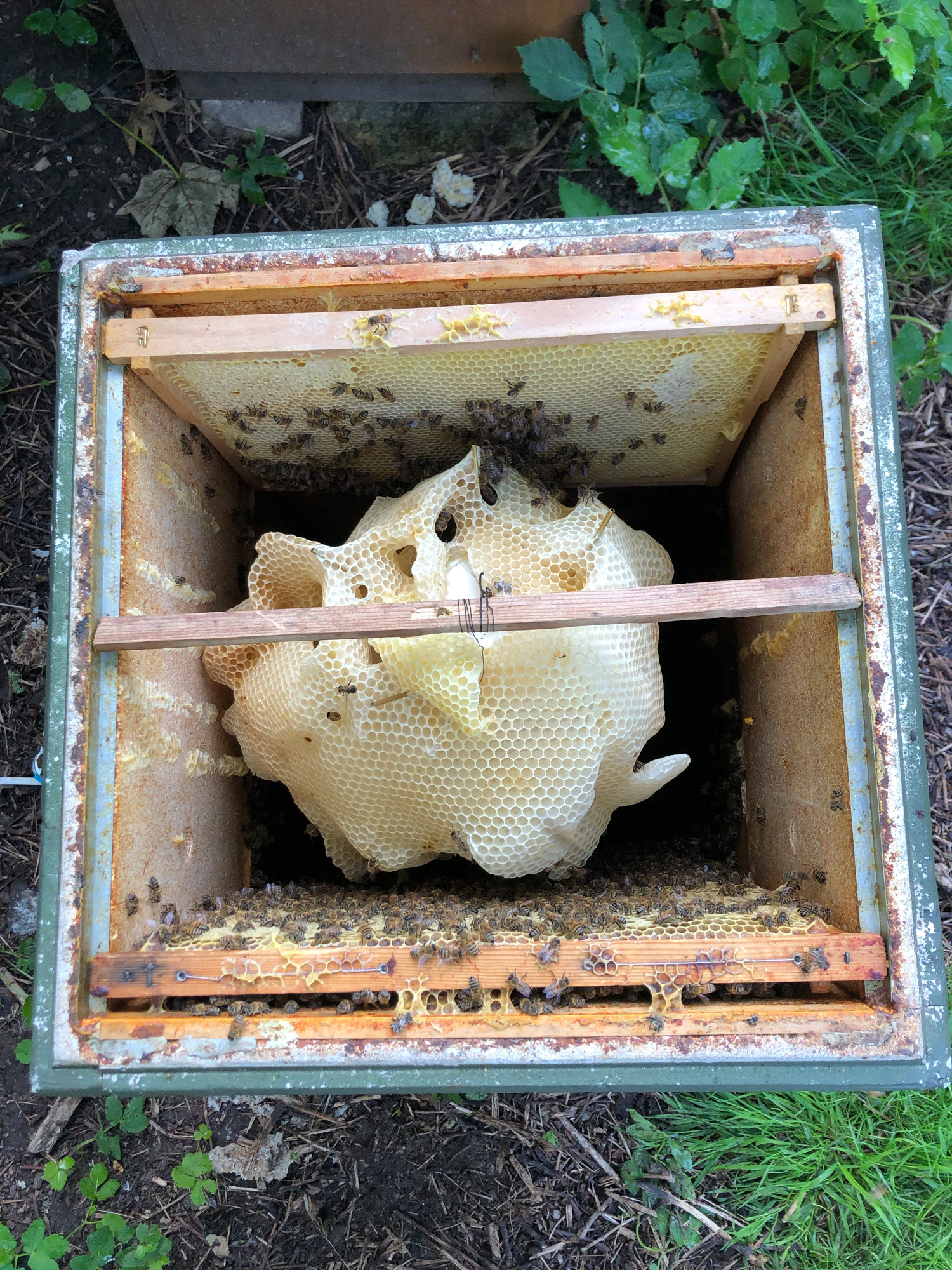
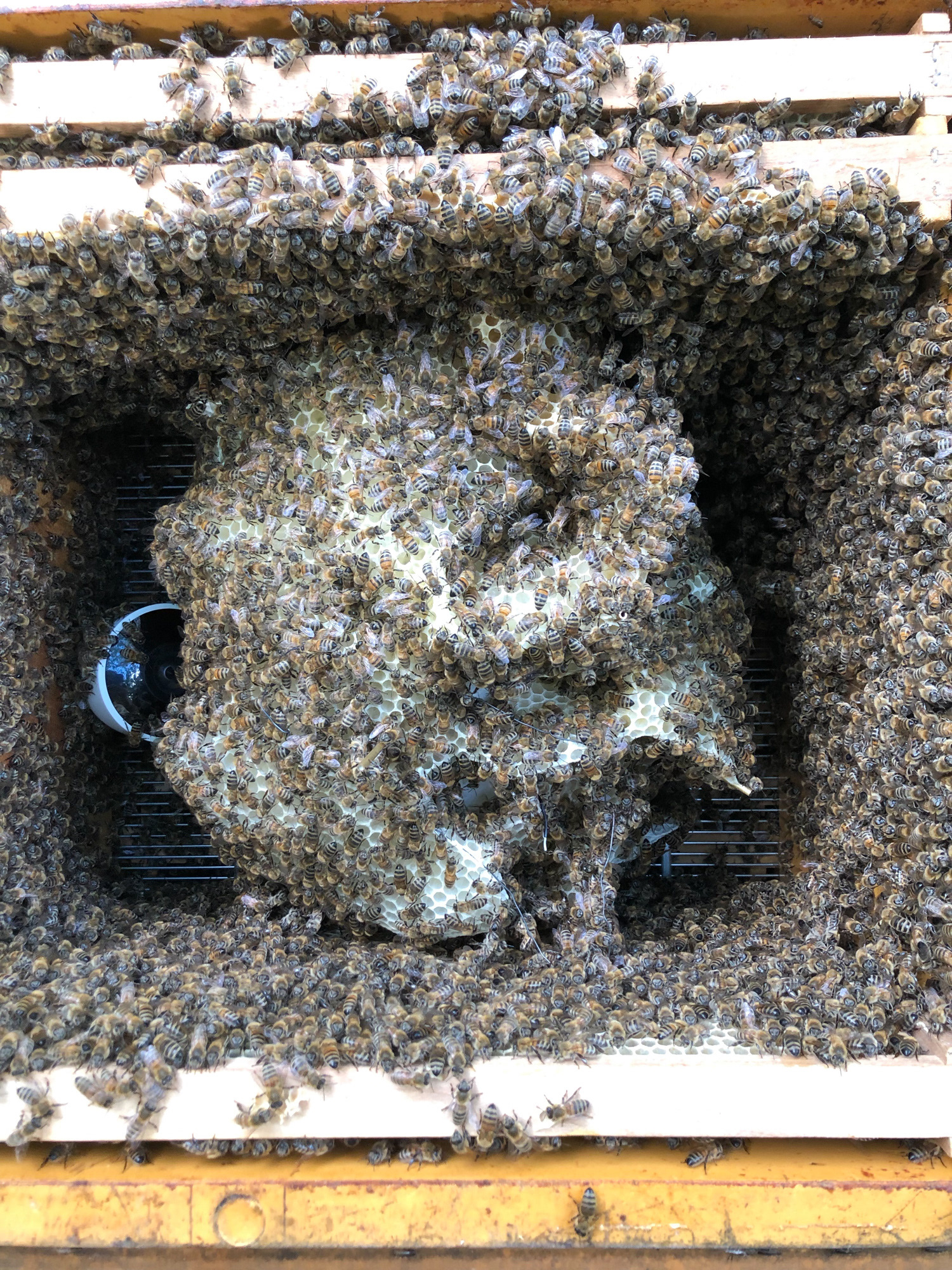
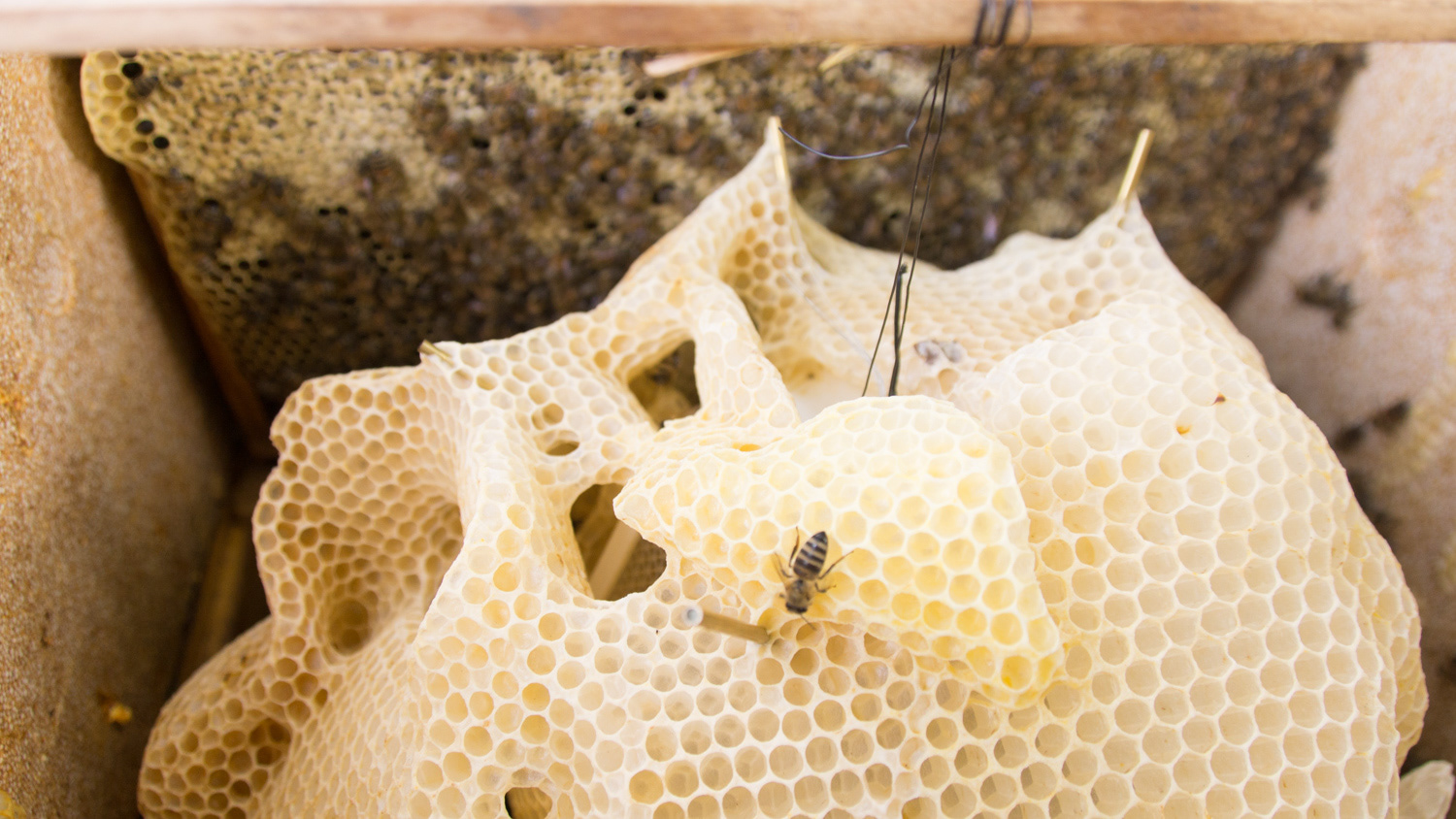
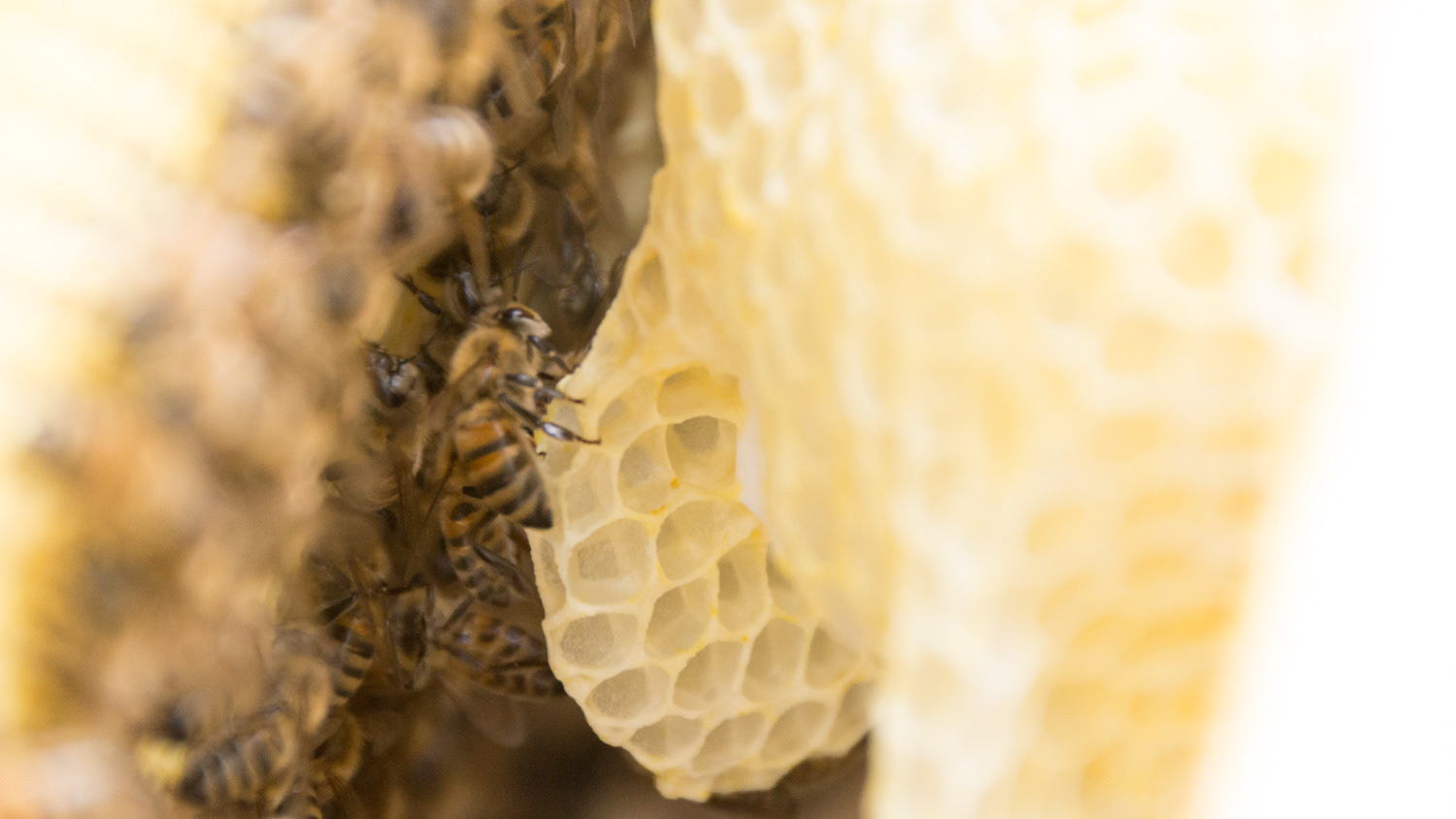
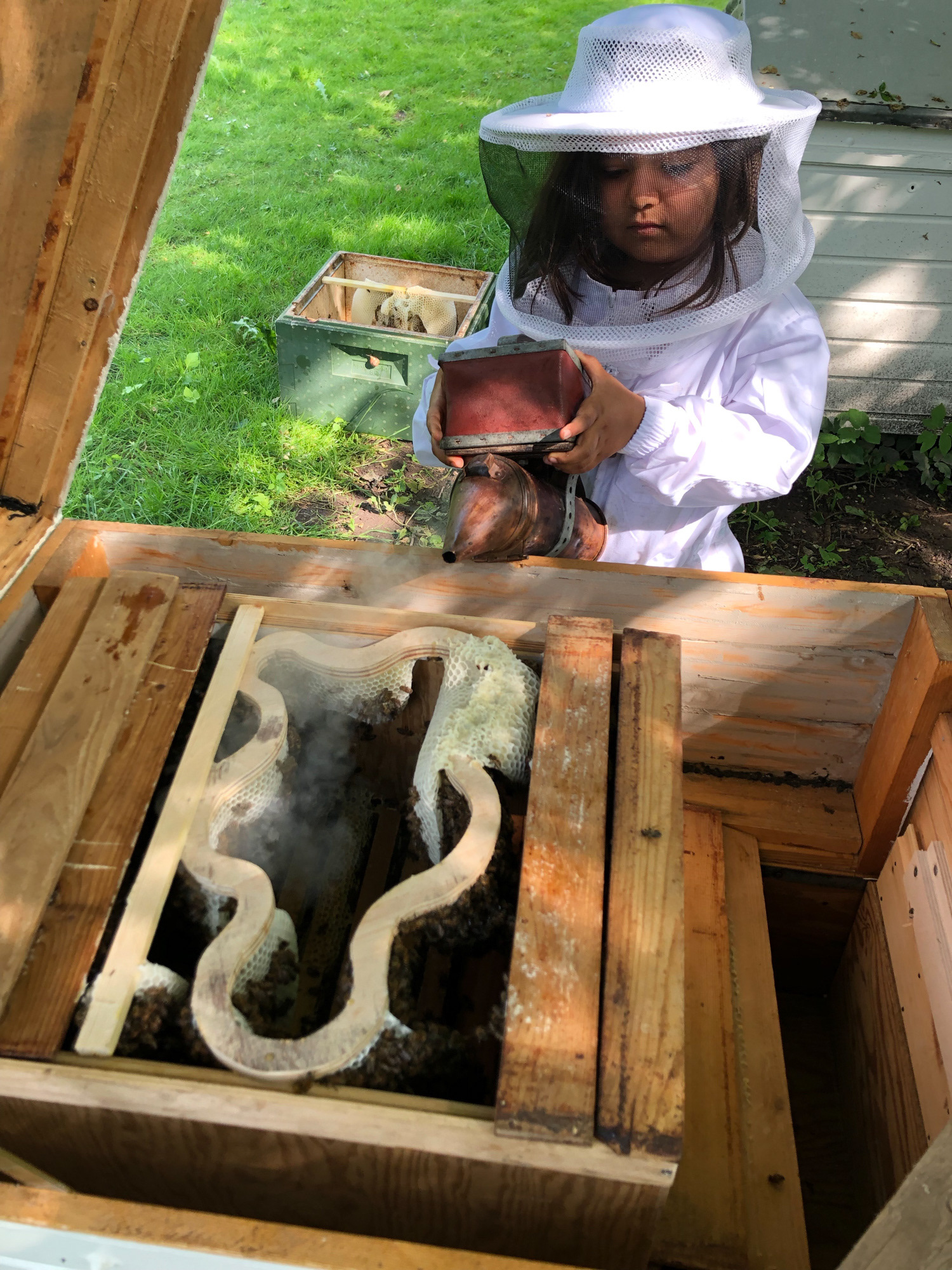
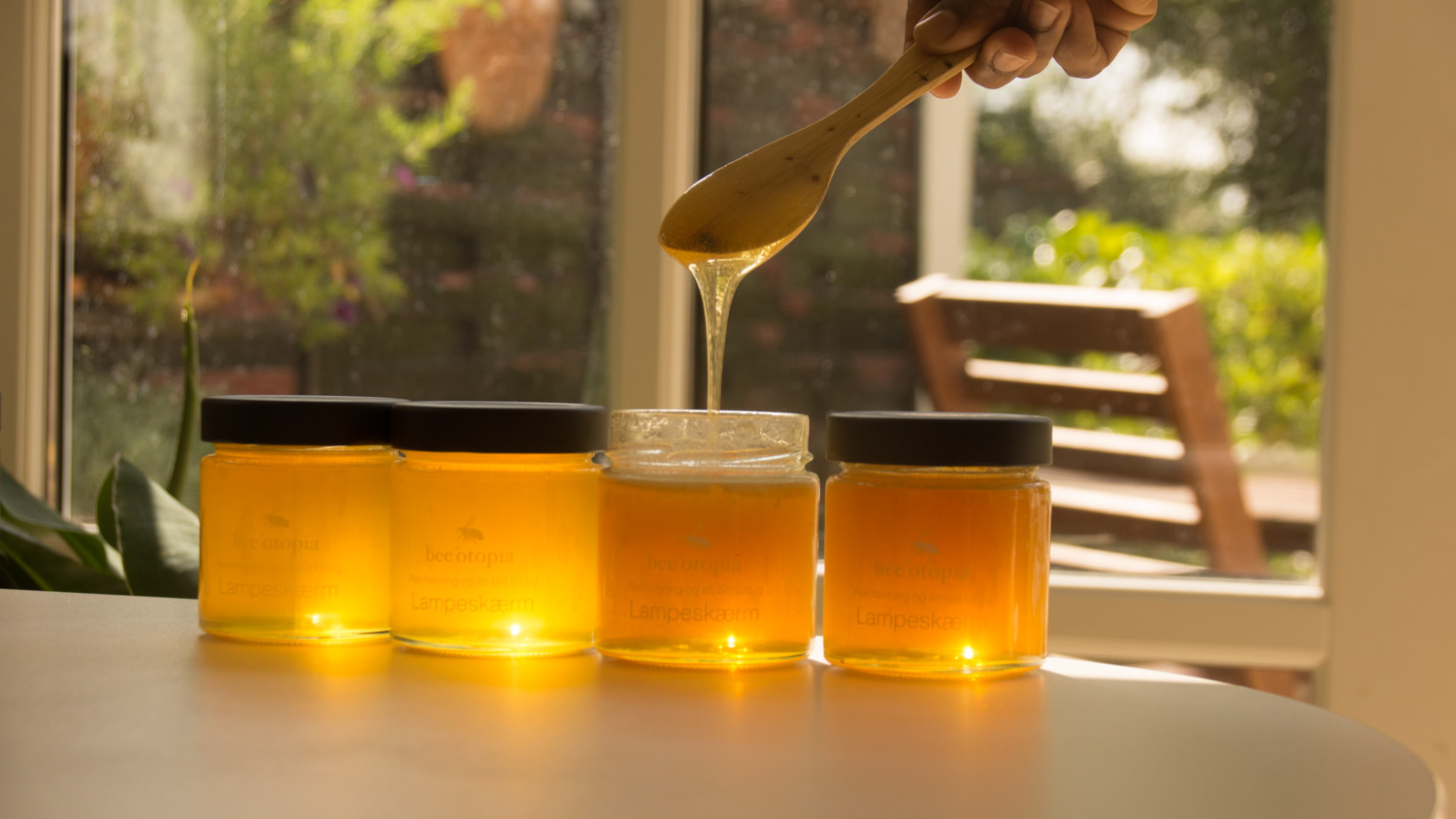
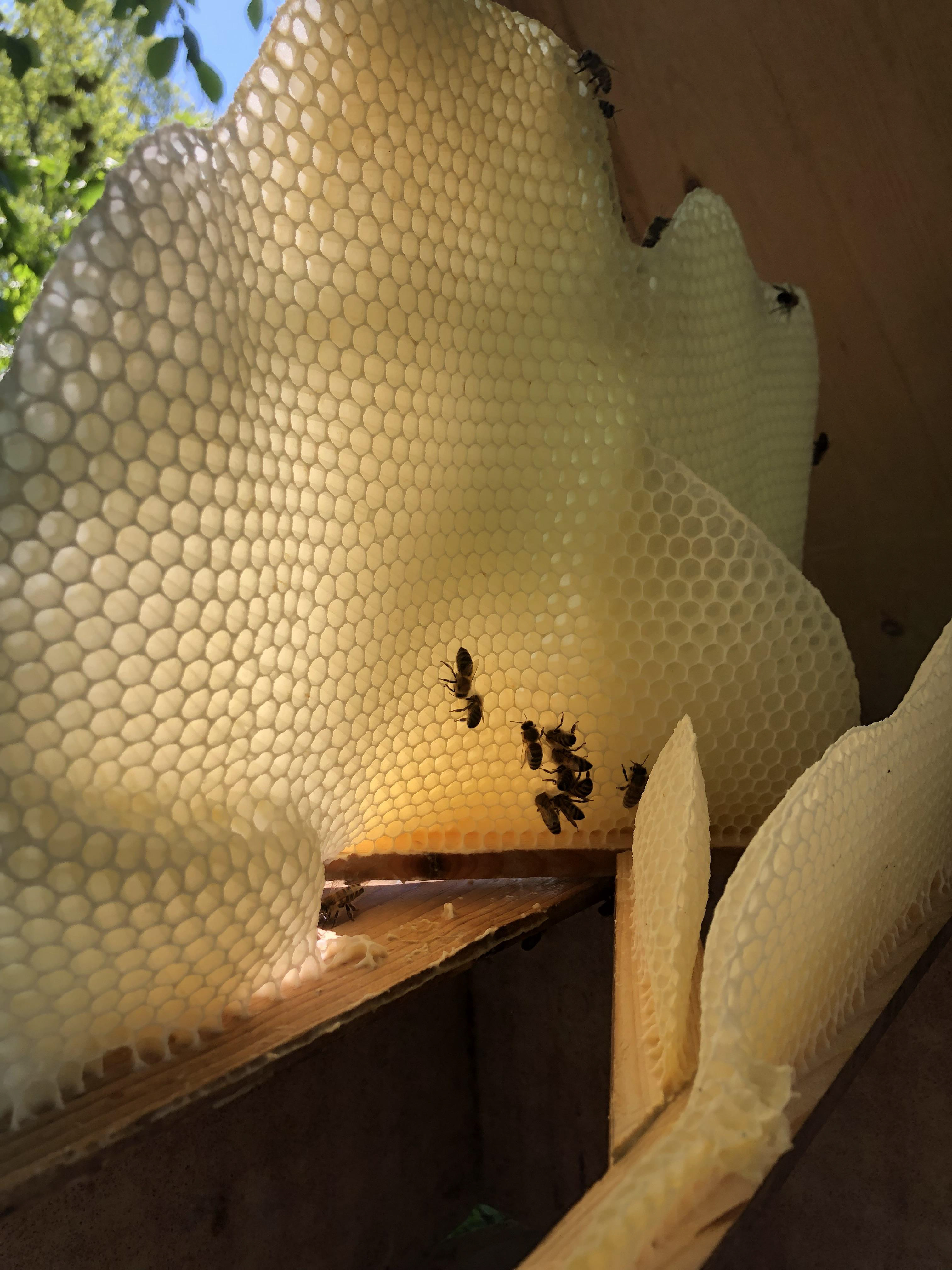
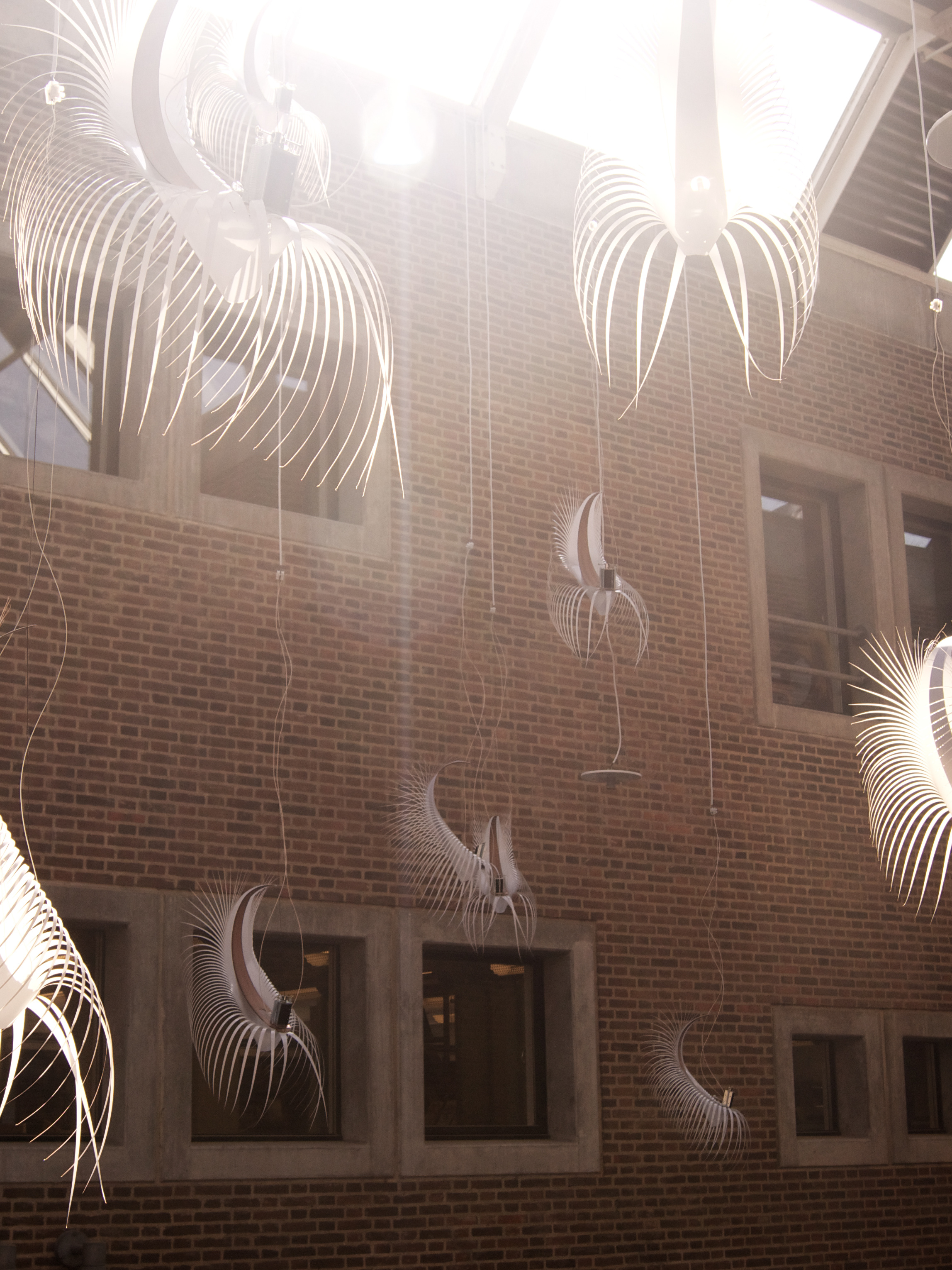
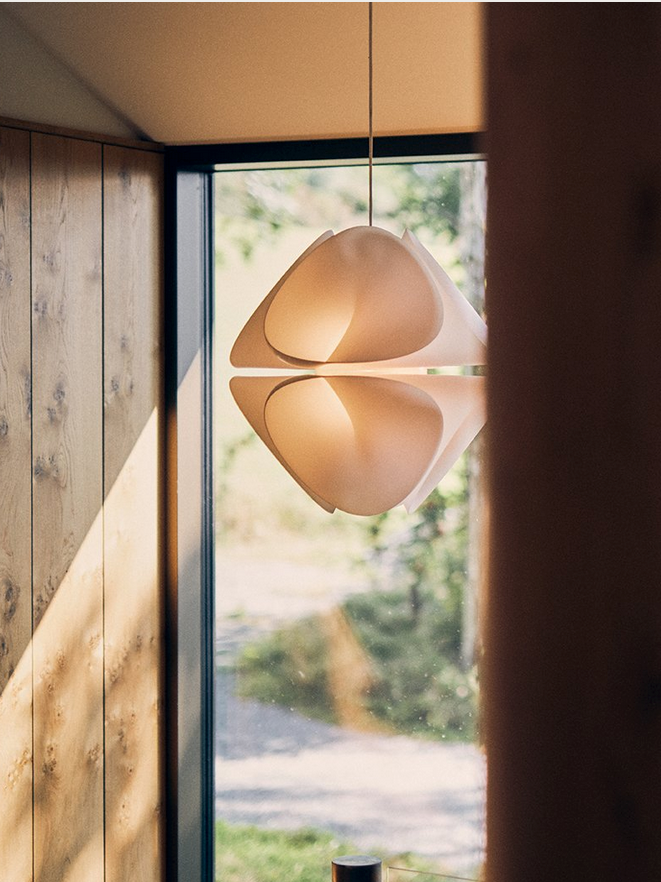
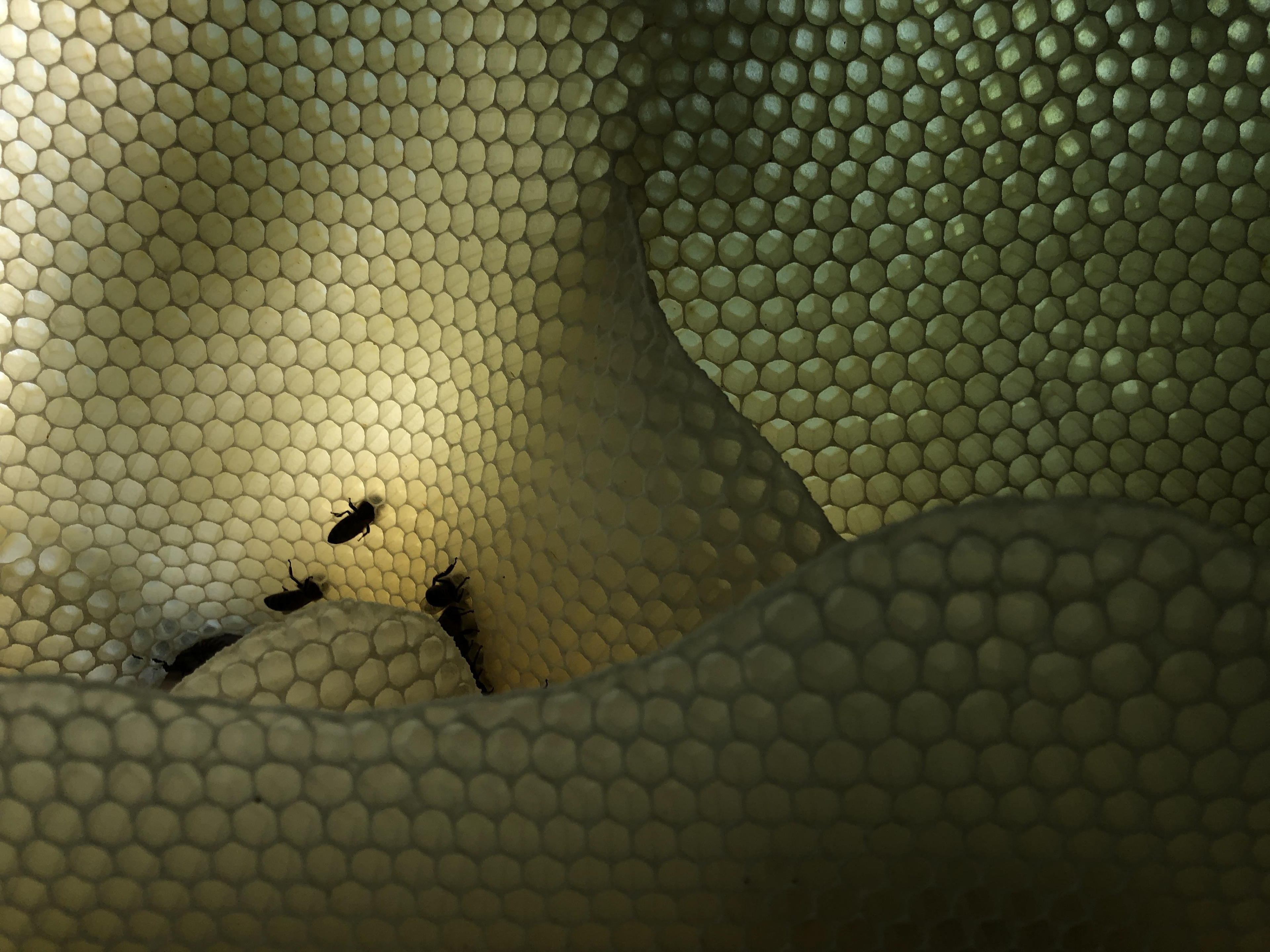
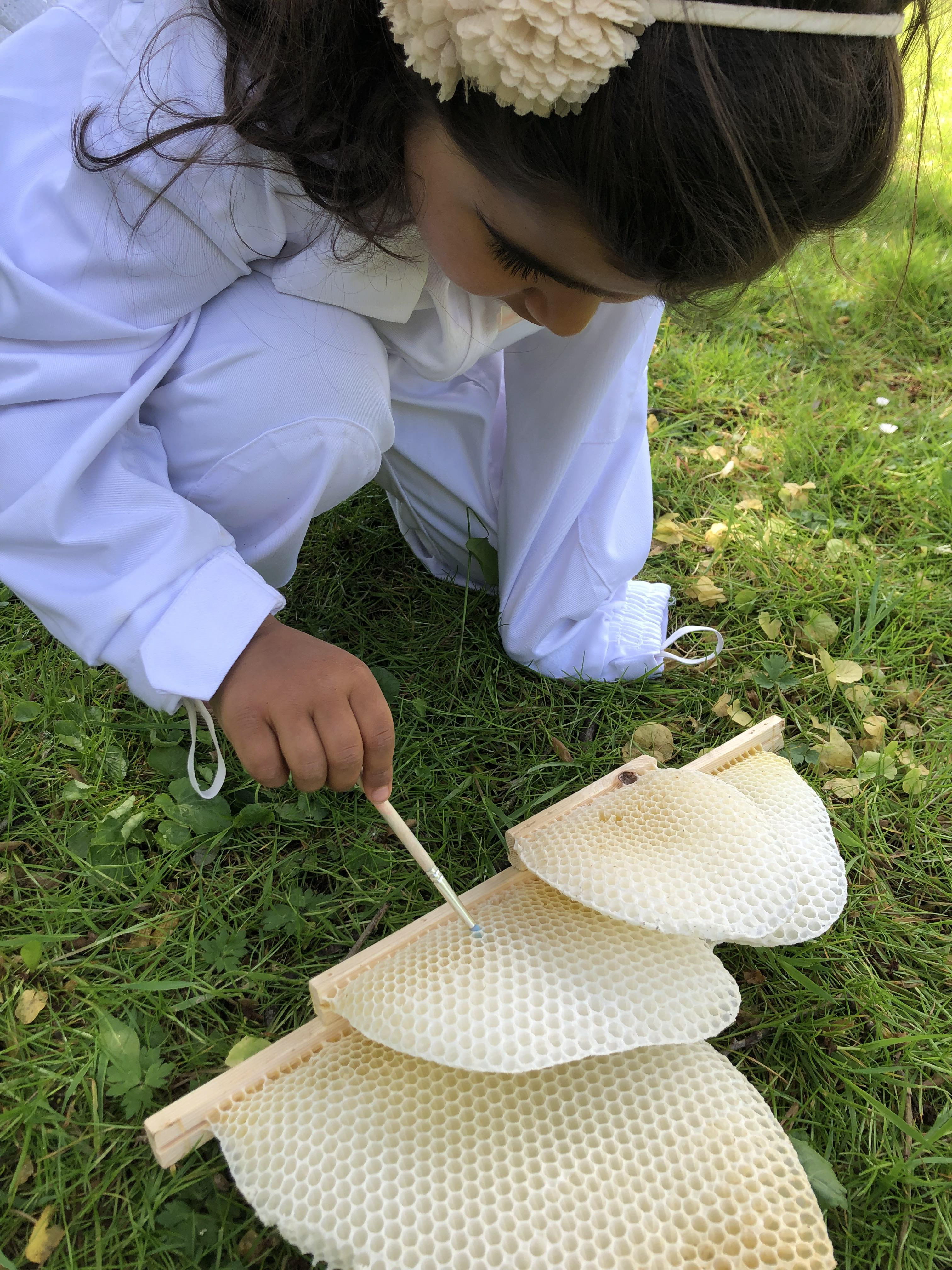
Through a series of trial-and-error experiments, Skouboe developed a unique collaboration between designer and bee colony. Working with more than 60,000 bees as co-creators, he explored how natural processes could become a form of manufacturing. The bees produced lampshades entirely from beeswax, functioning as a living, self-organising "3D printer." Unlike industrial production, this process generated no waste beyond pollinated flowers, honey, and new ecological value. The project demonstrates a radically different approach to design—one based on cultivation, growth, and collaboration with living systems rather than extraction and mass production.
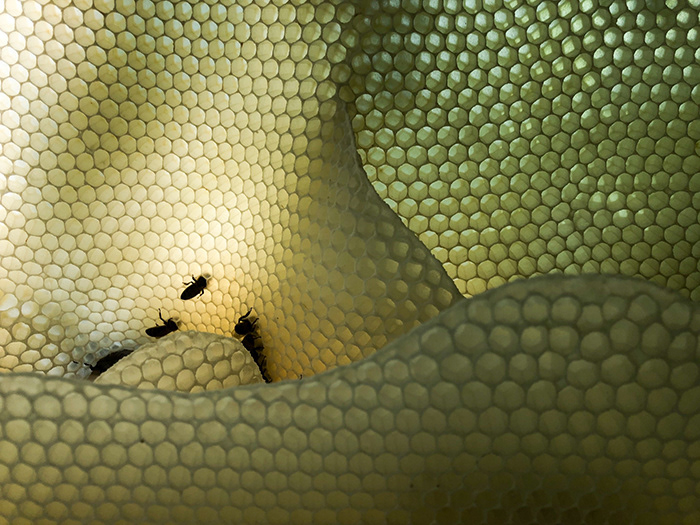
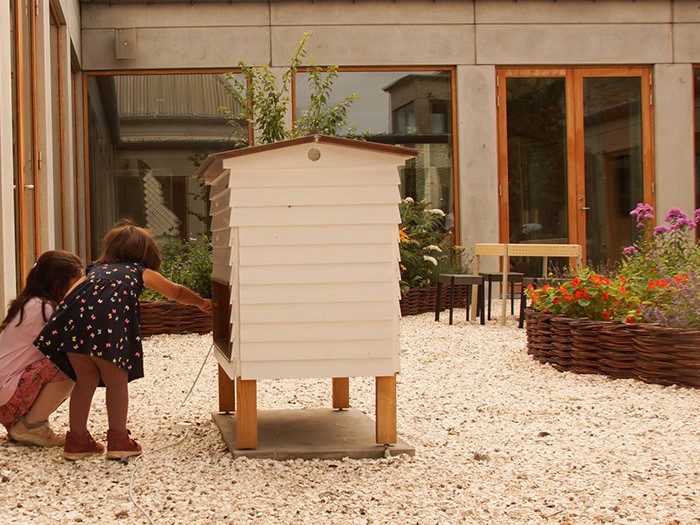
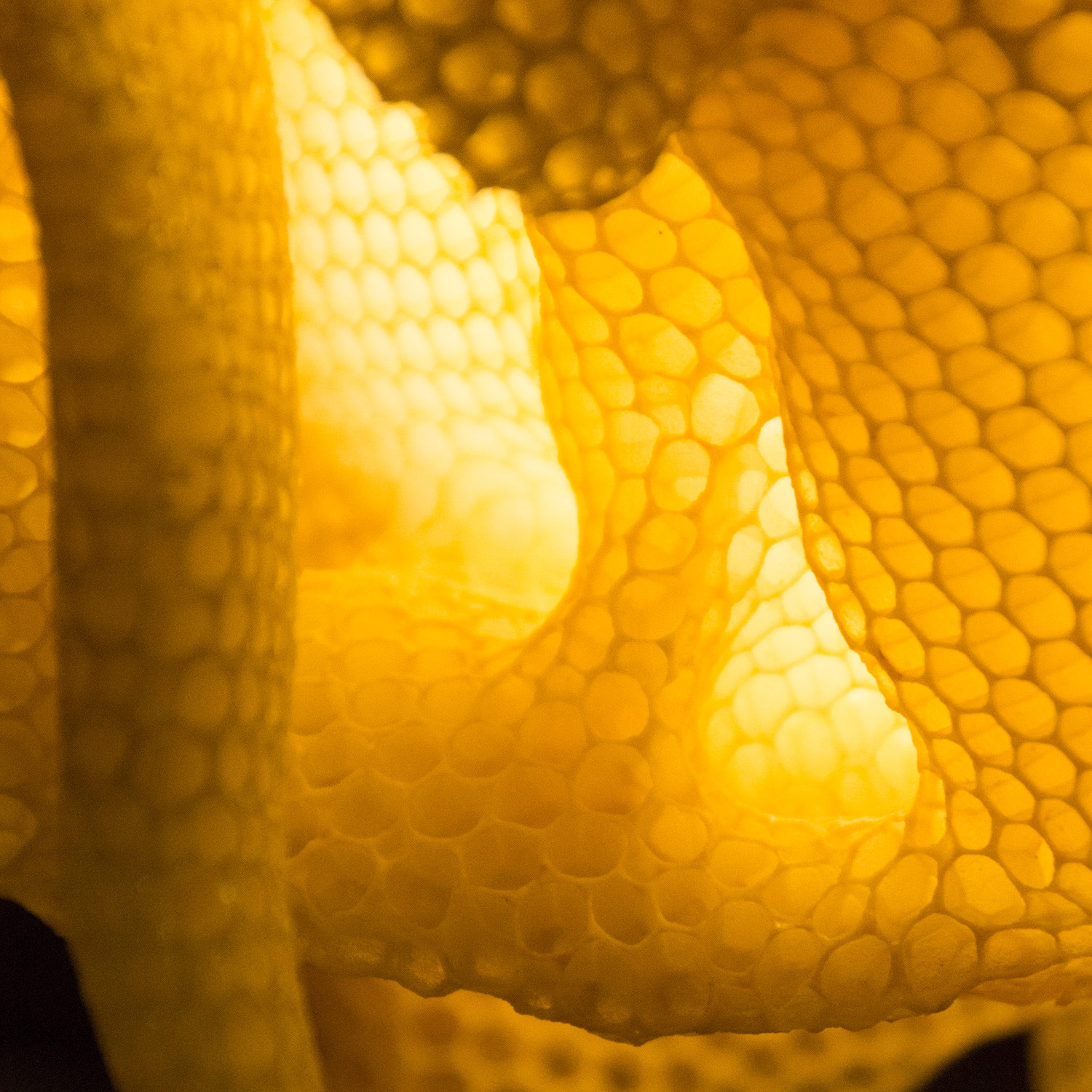
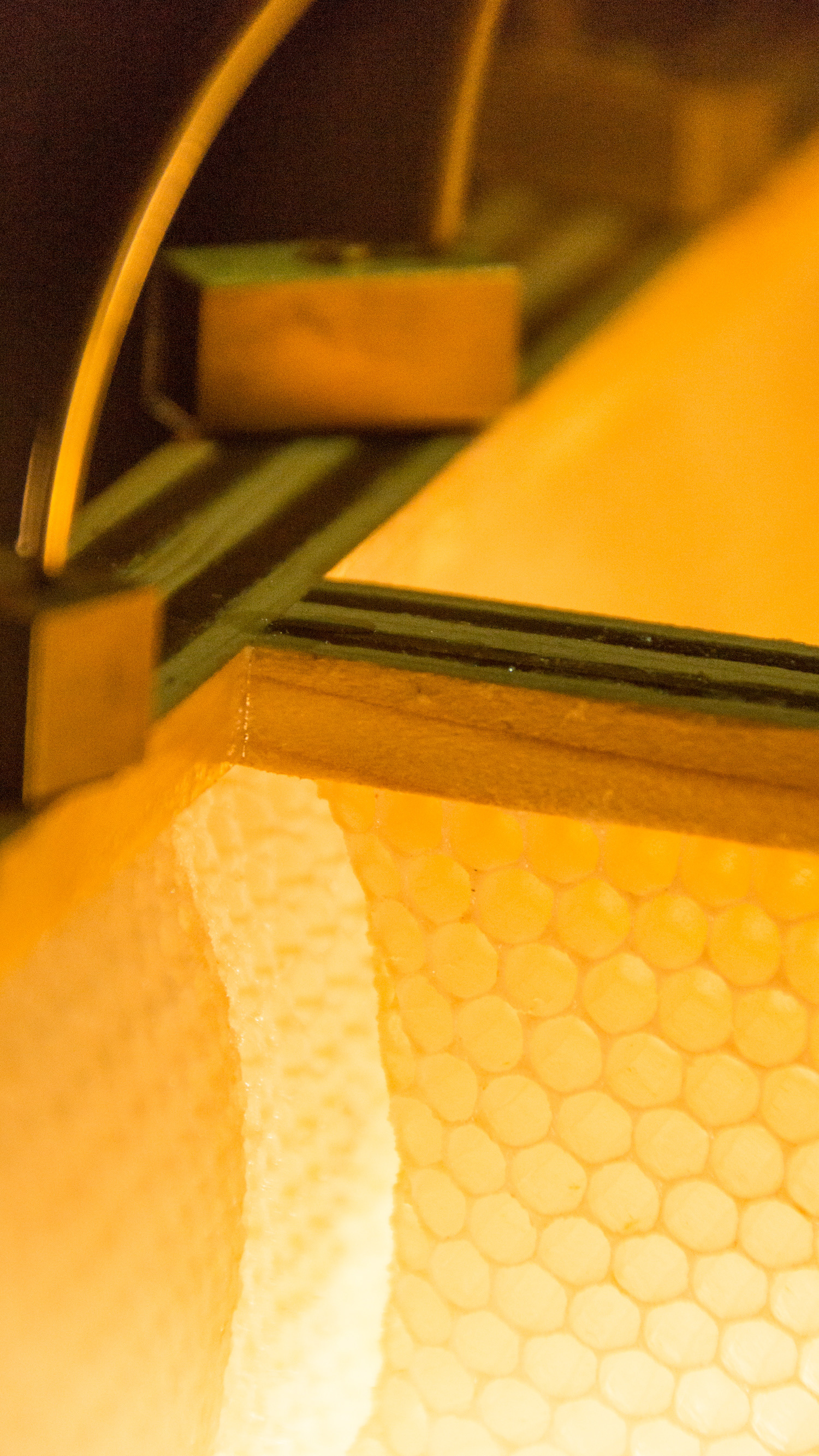
For Skouboe, whose work often explores the intersection of technology, ecology, and aesthetics, the beehive became a laboratory for discovering new forms, materials, and methods. The bees created extraordinary light-filtering structures, intricate surfaces, cavities, and patterns that far exceed human manufacturing capabilities. Infrared cameras installed beneath the hives allowed visitors to observe the construction process in real time, revealing an invisible world of collective intelligence and biological craftsmanship.
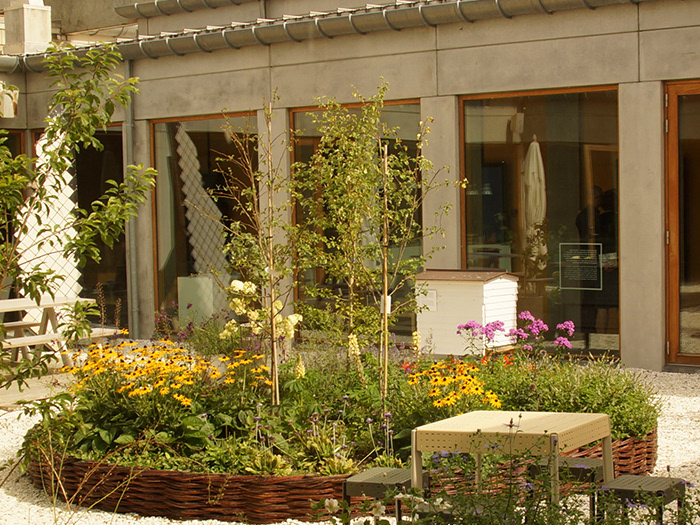
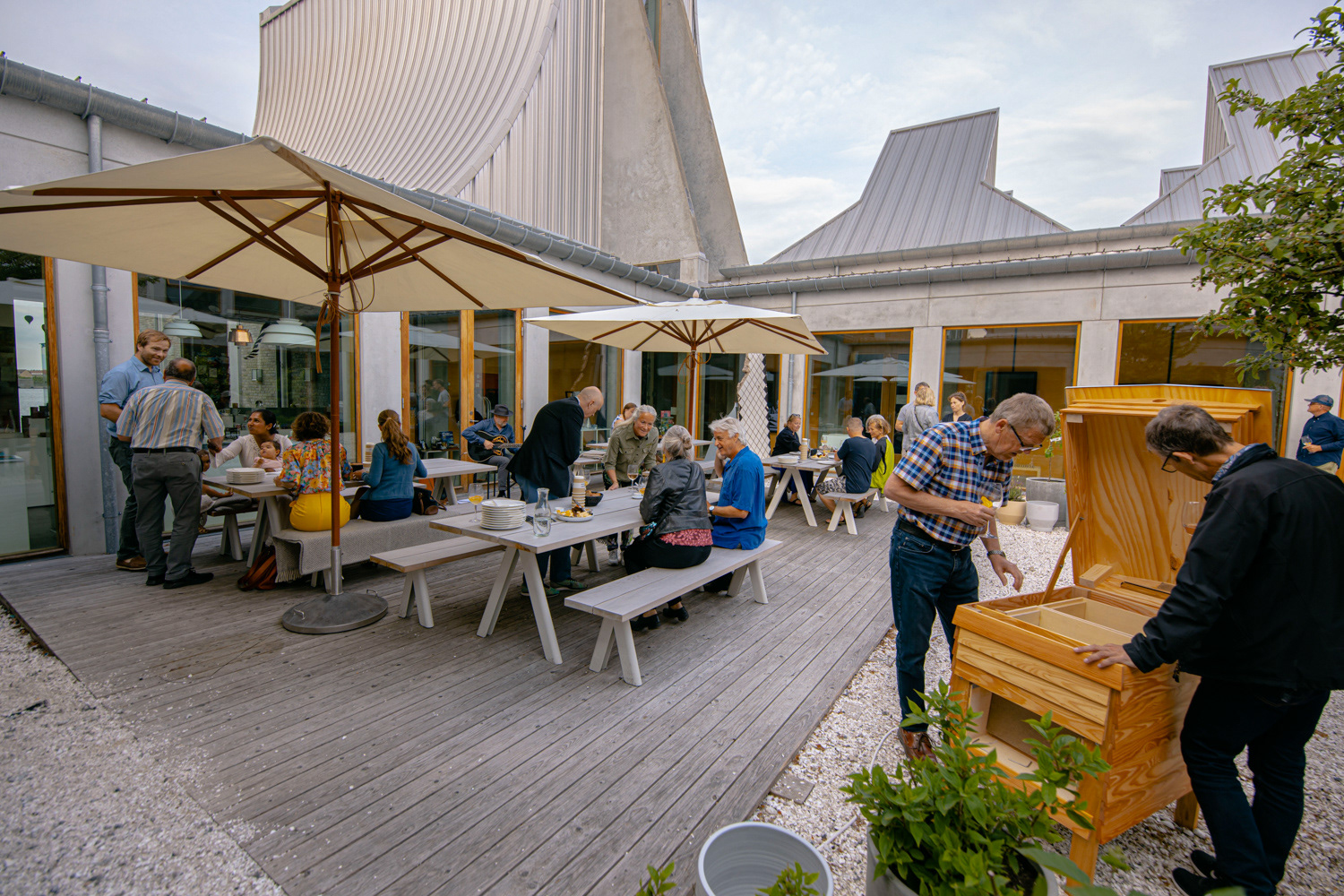
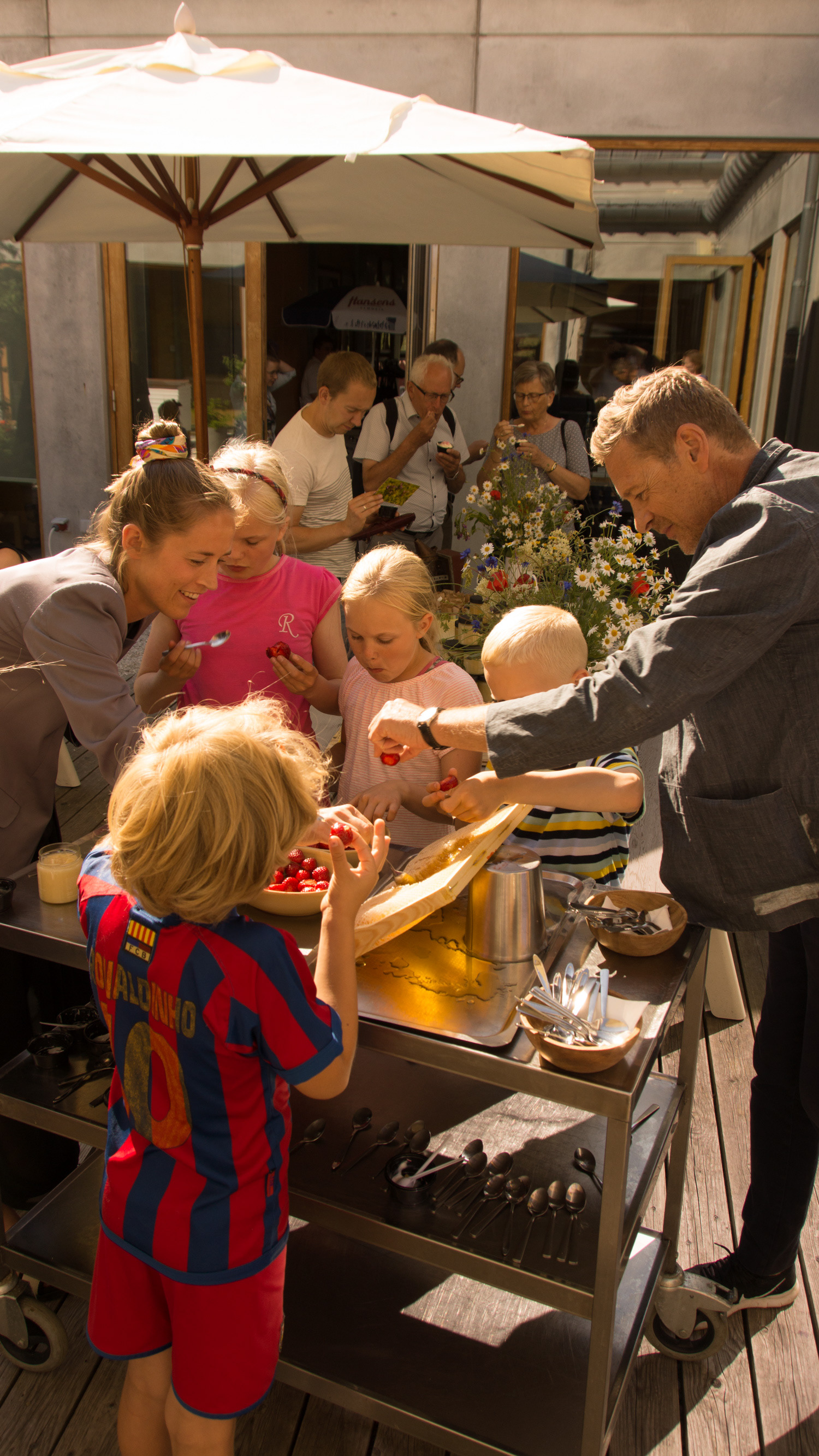
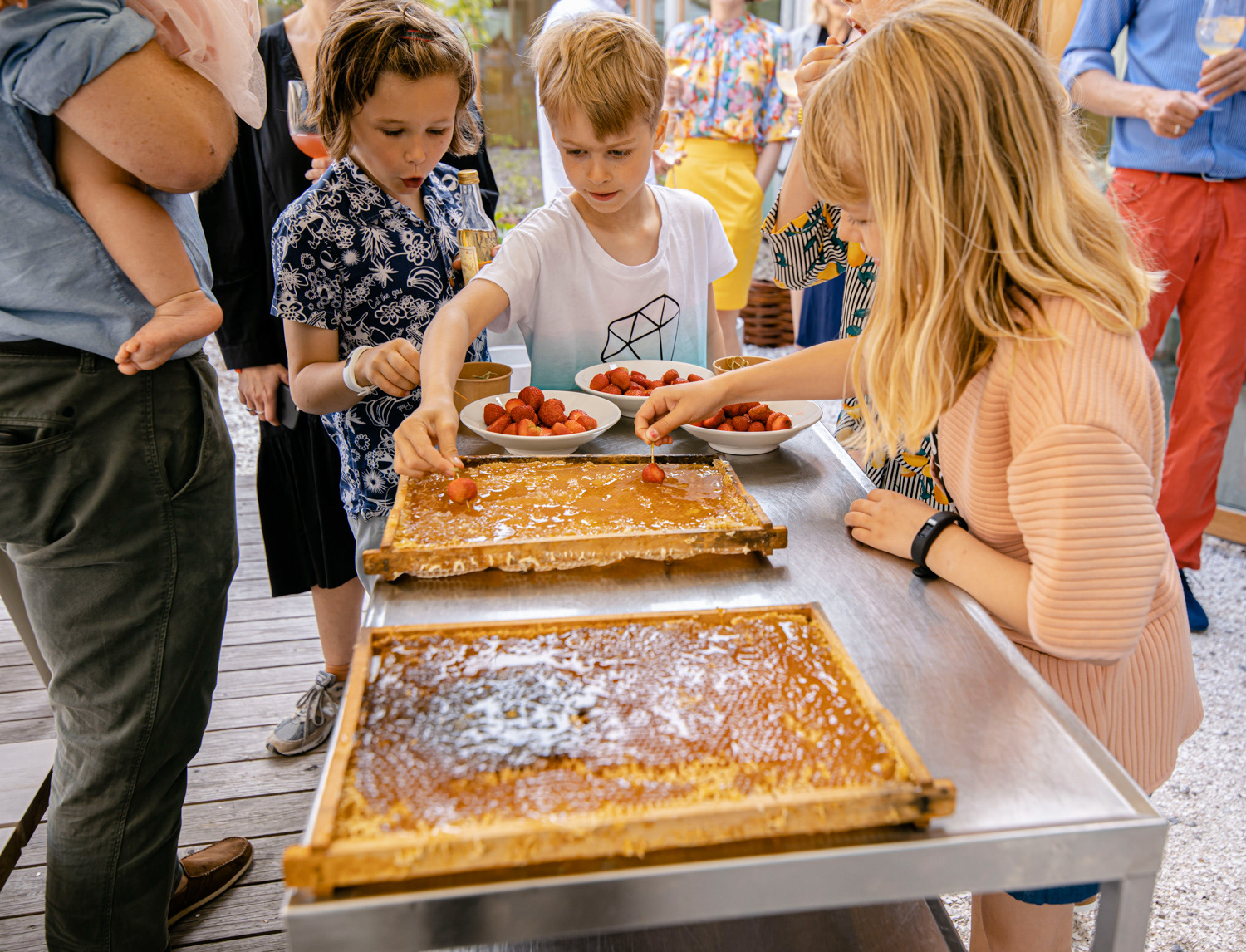
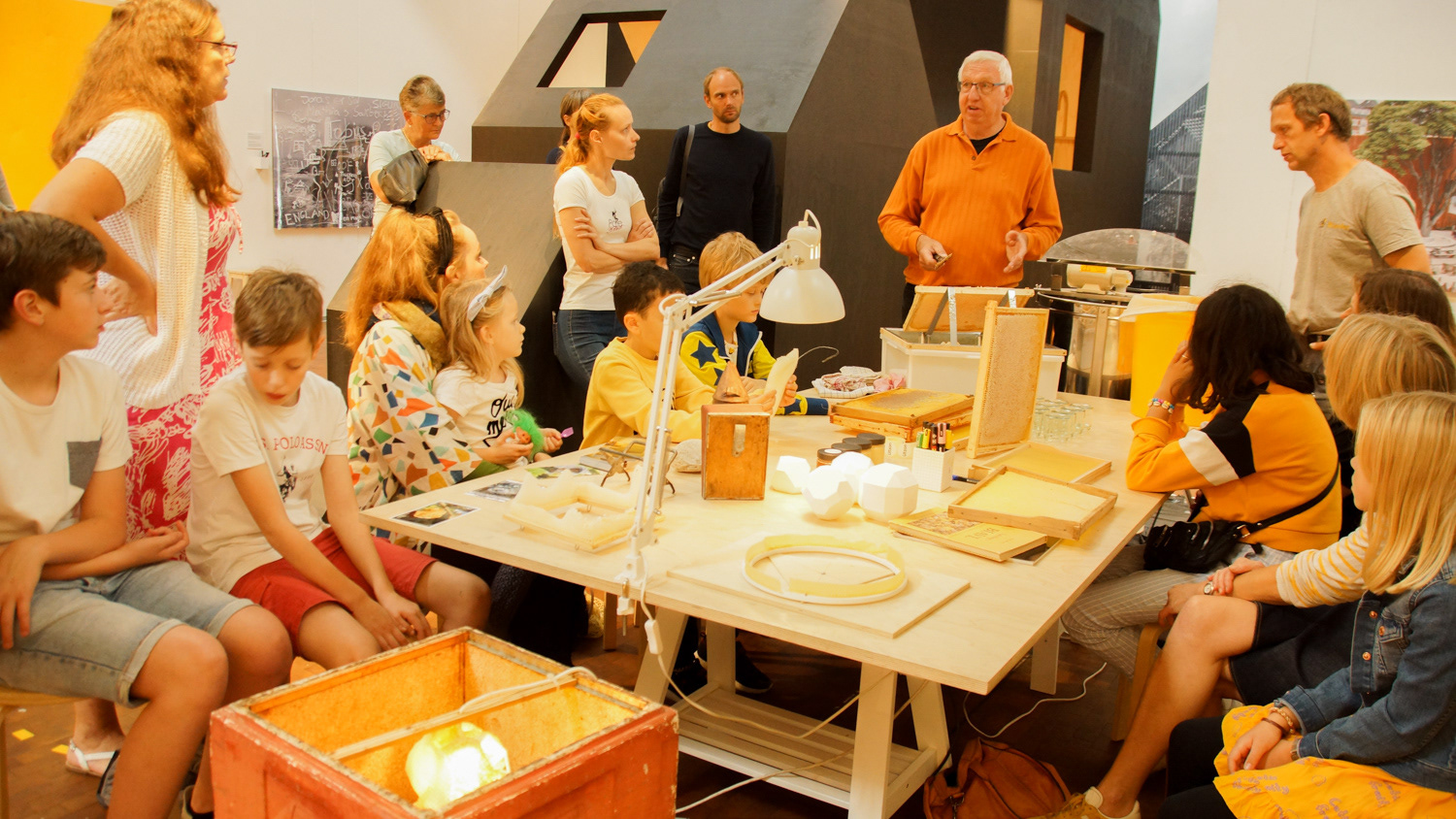
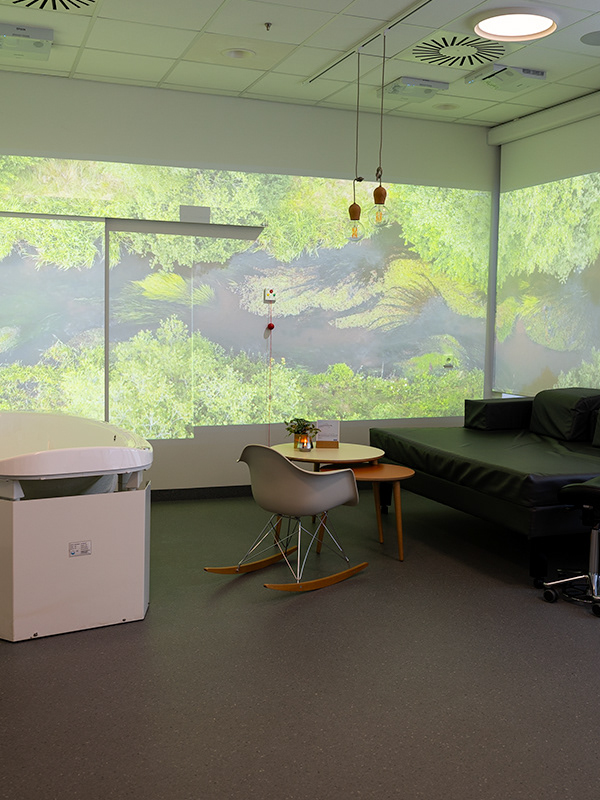
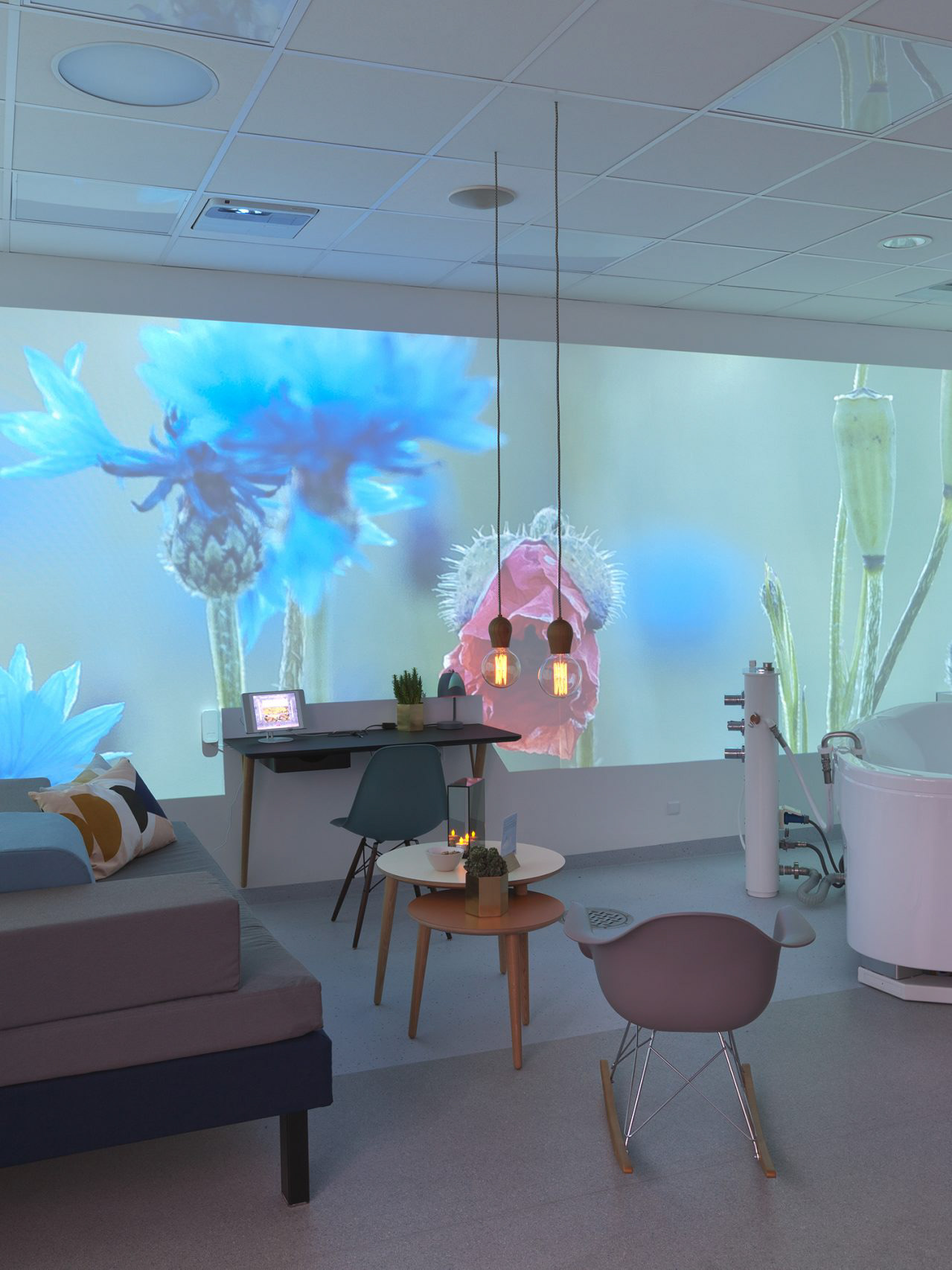
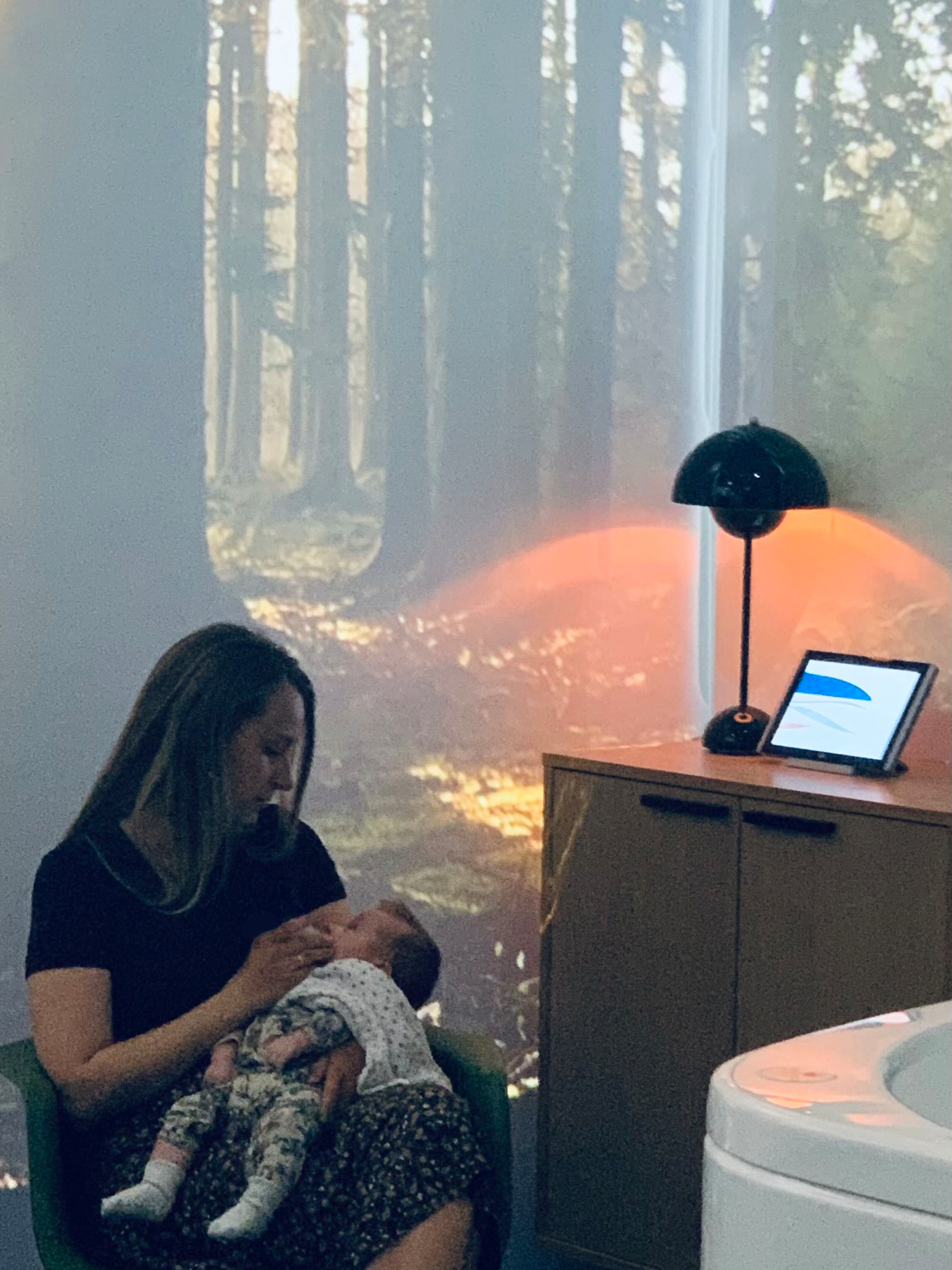
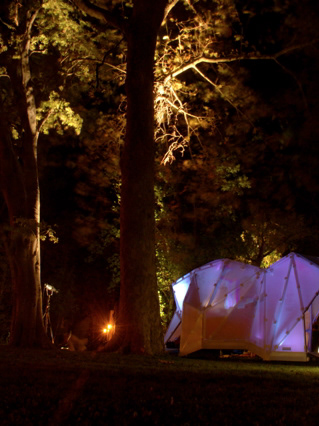
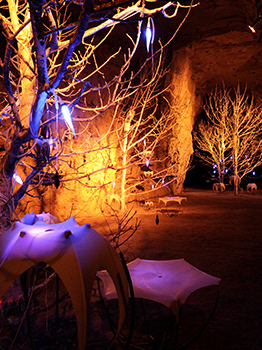
As part of the exhibition Space Crazy at the Utzon Center, Bee'otopia transformed part of the exhibition into a giant beehive environment. Here, a striking contrast emerged: children who had been running, climbing, and shouting elsewhere in the exhibition suddenly became quiet. They carefully explored the fragile honeycomb structures, studied the light passing through the wax constructions, and observed the activities of the live bees. Curiosity replaced activity, and reflection replaced distraction.
Through these encounters, Bee'otopia sparks conversations about where things come from, how they are made, and what alternatives might exist. By presenting a tangible vision of local production and ecological collaboration, the project encourages young visitors to imagine new relationships between humans, technology, and nature. More than an exhibition, Bee'otopia is a speculative prototype for a future in which design contributes not to increased consumption, but to ecological balance and regeneration.
Together with philosopher Kim Møller, Skouboe further developed these ideas in Chapter 6: Bee'otopia: Made by Bees in A World Scientific Encyclopedia of Business Storytelling (2023), exploring how storytelling, design, and biological systems can inspire new models for sustainable innovation.
Artwork for exhibition Space Crazy
Place: Utzon Center
2019
Support: National Danish Art Council
Publication: Chapter 6: Bee’otopia: Made by Bees,
“While preparing Bee’otopia, I calculated the travel distance of all the objects I touched during a single day. The total was almost one million kilometres—the equivalent of travelling around the Earth 25 times. When children hear this, they immediately begin checking the ‘Made in’ labels on their clothes and belongings. Suddenly, they start asking questions. Why do so many of the things in our homes come from the other side of the planet rather than from our own neighbourhoods? More often than not, their conclusion is simple: it seems strange, even a little absurd. That moment of reflection is exactly what Bee’otopia is designed to inspire.”
— Esben Bala Skouboe
— Esben Bala Skouboe
Infrared video captured inside the hive during printing, speed 1:1
Infrared video captured inside the hive during lamp printing, speed x 500